Seasonal Storage Without the Annual Shuffle: A Joiner's Guide to Once-a-Year Belongings
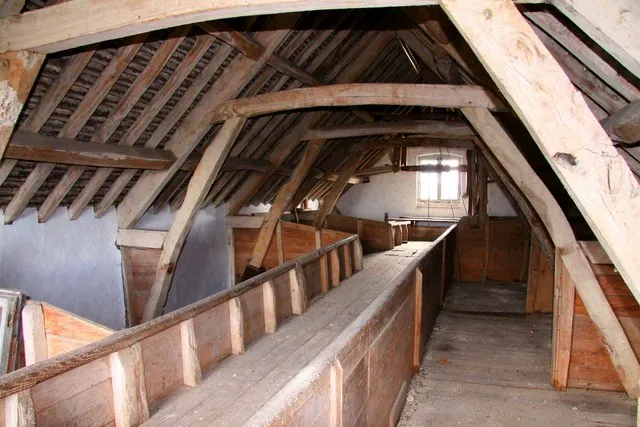
Photo: Steve Daniels, CC BY-SA 2.0, via Wikimedia Commons
Every household has its own annual migration. In late November, boxes of baubles and fairy lights are brought down from a loft or the top of a wardrobe. In January they go back. In May, the summer cushions emerge from a cupboard under the stairs; in October, they return. Suitcases follow a similar rhythm, appearing before a holiday and then occupying valuable space for months afterwards. These items are not numerous, but they are awkward, and they expose a weakness in much ordinary storage: it is designed for the everyday and rarely for the occasional.
Fitted joinery cannot make a Christmas tree smaller. It can, however, give seasonal belongings a defined place, protect them from the conditions that cause damage and prevent them from colonising the cupboards that daily life depends upon. The aim is not to dedicate half a house to December. It is to make the annual shuffle calmer, safer and less disruptive.
Begin with an inventory, not a cupboard
The temptation is to begin with a spare wall or an empty alcove and ask what might fit there. A more reliable starting point is a list. Record the bulky seasonal items in the household, their approximate dimensions and how often they are actually used. A suitcase set may nest into a single footprint; a dismantled artificial tree may be longer than expected; garden cushions may be bulky but light; decorations may occupy several mismatched boxes that could be consolidated.
This inventory should be honest. Items used once every five years are not seasonal storage priorities. Nor should the list be limited to Christmas. British households commonly store summer seat cushions, picnic equipment, camping gear, winter bedding, fans, heaters and the paddling pool that seemed essential during one warm week. Each has different requirements. A measured survey of the available space, taken alongside the inventory, will show whether the solution is a dedicated cupboard, a high-level shelf, a deep drawer or a modest extension to an existing run of fitted furniture.
Location matters more than capacity
The best seasonal store is dry, ventilated and reachable without an annual feat of agility. Capacity is secondary if the location damages the contents or makes retrieval so inconvenient that the items drift back into the everyday cupboards.
Lofts are common in British homes, but they are not uniform. A well-insulated, ventilated loft with a proper access hatch and a stable floor may suit rigid boxes and decorations. A loft that is dusty, extremely hot in summer or prone to condensation is less suitable for textiles, photographs or anything sensitive to damp. Garages and sheds are often worse: they may be cold, humid and vulnerable to pests. Suitcases stored in a damp garage can acquire a musty smell that is difficult to remove.
Understairs cupboards, eaves spaces and the upper reaches of utility rooms can work well if they are dry and can be fitted with sensible access. The key is to match the location to the item. Rigid plastic storage boxes tolerate more variation than upholstered cushions. Suitcases prefer dry conditions. Christmas lights and electrical decorations should be kept away from damp and checked before use. Textiles benefit from breathable storage and should never be pressed against a cold external wall where condensation may form.
Access is part of the design
Seasonal storage is used rarely, but when it is used, it is often needed quickly. A cupboard packed to the ceiling with no clear labelling is not really storage; it is a postponement. Fitted joinery can improve access with adjustable shelves, pull-out trays, deep drawers on rated runners and openings sized to the boxes that will actually be stored.
Weight deserves consideration. Heavy suitcases should not be lifted above shoulder height if that can be avoided. A low bay with a sturdy base and a wide opening may be more practical than a high shelf. Lighter decorations can occupy higher positions. If the store is in a loft, the hatch and ladder should be safe, and the route should be clear. If it is under the stairs, the door should open fully and the internal layout should allow boxes to be removed without unpacking the entire cupboard.
Labelling is not a finishing touch; it is part of the design brief. Standardised boxes, clear descriptions and a simple plan of what lives where will save time and reduce duplicate purchases. A joiner can leave a small labelled index inside the cupboard door, or simply ensure that shelf heights suit the containers the household already owns.
Ventilation and the British climate
British weather is not an abstract concern in storage design. Cool external walls, heated rooms and imperfect ventilation create conditions where condensation can form. A cupboard that is sealed too tightly may trap moist air; one that is poorly constructed may admit draughts and damp. The objective is a stable, dry environment rather than a hermetic box.
Breathable materials and slatted shelves can help air move around stored items. Ventilation grilles may be appropriate in some cupboards, particularly where the external wall is cold. Textiles should be clean and thoroughly dry before storage, and plastic bags should be avoided for anything that could sweat. Cushions and bedding are better served by cotton storage bags or clean, breathable covers. In older homes, it is also worth checking that any fitted cupboard does not block an existing air path or interfere with the building's intended ventilation.
Do not sacrifice the everyday
The most common error in seasonal storage is to take the best cupboard in the house and fill it with things used once a year. Daily storage should remain daily. Seasonal items should be accommodated in the residual spaces: the high shelf above a wardrobe, the deep end of a utility run, the otherwise awkward eaves, the understairs volume that cannot be used for coats. Where space is genuinely tight, a single tall cupboard in a spare room or on a landing may be a better compromise than dismantling the organisation of the kitchen or boot room.
Fitted joinery is useful here because it can shape itself around the awkwardness. A suitcase bay can be sized to the largest case and fitted with a reinforced shelf above for lighter boxes. A Christmas store can include a vertical slot for wrapping paper and a deeper section for the tree. A cushion cupboard can be shallow, ventilated and lined with a breathable material. These are small decisions, but they prevent the annual contents from spreading into places where they do not belong.
An annual audit, built in
The final consideration is maintenance. Seasonal storage should be reviewed when it is opened, not left unexamined for years. A quick annual audit will reveal damaged boxes, failed labels, damp patches or items that are no longer wanted. Fitted joinery that can be adjusted, repaired and relined will support that habit far better than fixed, sealed construction.
The once-a-year items are never going to disappear. But they need not dominate the house for the rest of the year. With a measured plan, a sensible location and a proper regard for ventilation and access, fitted storage can give seasonal belongings a place of their own, leaving the everyday cupboards to do their everyday work.